
Top Platforms for Building Interior Designer Portfolio Websites (2025 Guide)

Styled Habitat offices
For interior designers, a portfolio website is far more than a digital gallery. It is the entry point into your world. Your projects already hold atmosphere, narrative, and emotional depth. The role of your website is to translate that into an online experience that feels as intentional, refined, and immersive as the spaces you create.
At Bloom Studio, we craft identity-led portfolio websites for established and luxury interior design studios. Our work blends strategic clarity with aesthetic intelligence, helping designers present their work with the editorial quality and coherence it deserves. And over the years, one truth has become clear:
The platform you choose shapes the quality of your story.
Below, you will find a guide to the best platforms for interior designers. It offers candid insight on what works, what falls short, and which platform consistently delivers the best balance of beauty, functionality, and ease.
What an Interior Design Portfolio Website Needs to Do
Most platforms can display images. Very few can create an experience.
A high-end interior design portfolio must:
immerse the viewer in atmosphere and mood
tell the story behind each space
support large-scale imagery without compromising speed
convey expertise and clarity
feel beautifully structured, not templated
guide prospective clients through a seamless journey
In other words, it must feel like entering your world, not scrolling through a gallery.
The Best Platforms for Interior Designer Portfolio Websites
1. Squarespace: The Most Balanced and Designer-Centric Choice
Best for established studios, high-end designers, and anyone wanting a refined, editorial online presence without technical complexity.
Squarespace continues to stand out as the most elegant, dependable mid-way platform, combining design freedom with intuitive management.
Why interior designers choose Squarespace
Customisable with or without code
Portfolio engine designed for storytelling
Simple, stable backend with no plugins or updates
Integrated tools including email marketing, scheduling, SEO basics, ecommerce, and memberships
Reliable hosting and strong performance
Why we choose Squarespace at Bloom Studio
For our luxury and high-end interior design clients, Squarespace consistently delivers the sweet spot: refined design, calm maintenance, and space for narrative to breathe.
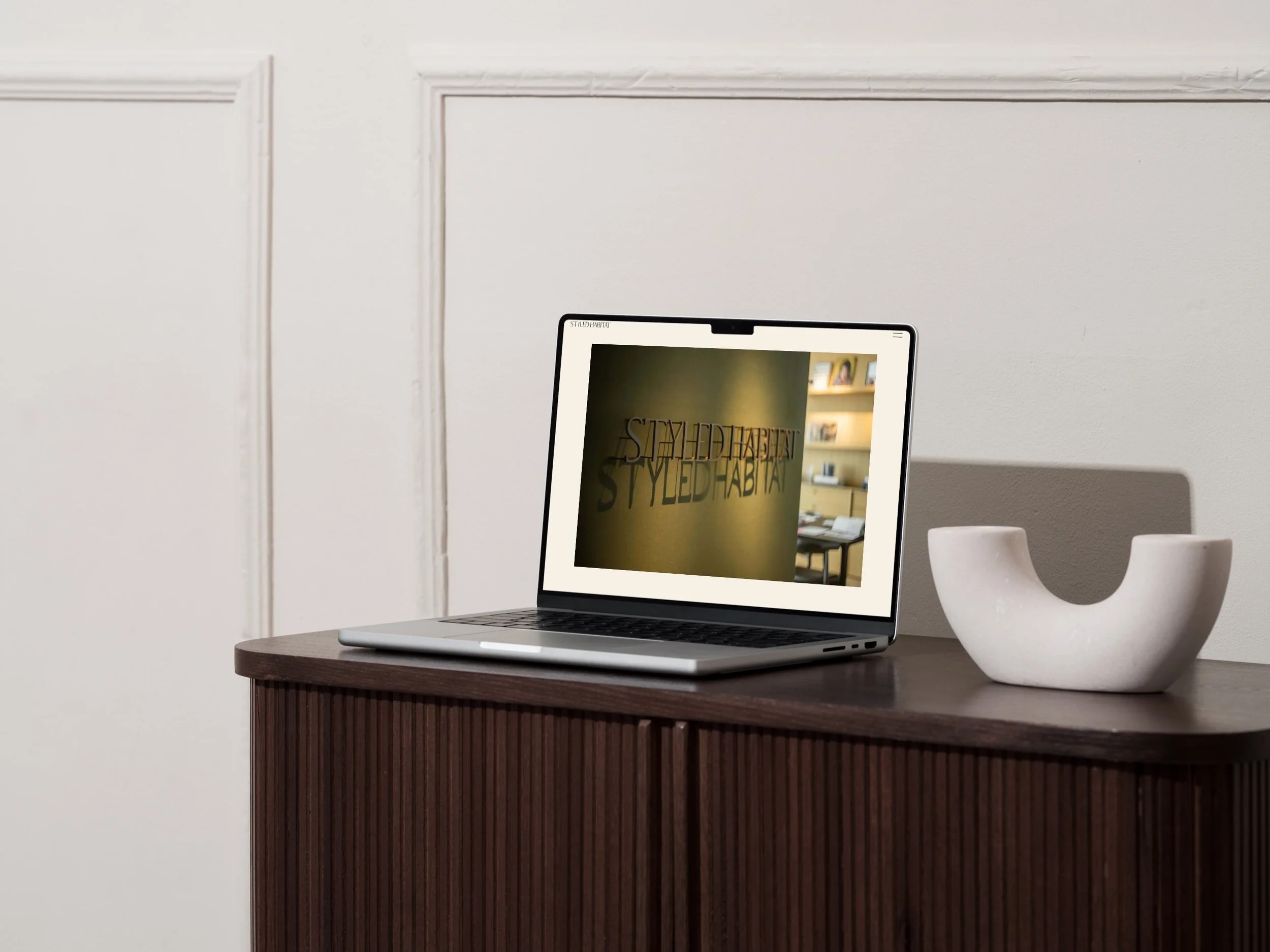
Case Study: Styled Habitat
A Website That Feels as Immersive as the Interiors
When we redesigned Styled Habitat’s portfolio website, our goal was to translate the studio’s sensibility — calm confidence, refined modernism — into a digital experience.
Using Squarespace, we:
crafted an editorial, atmospheric layout
applied custom CSS for added depth and refinement
built a project system the studio can update effortlessly
showcased imagery in large, cinematic proportions
shaped a user experience that mirrors their design language: tactile, immersive, intentional
Squarespace’s flexibility allowed us to create something elegant yet structured, reflecting the idea of refined, not restrained.
2. Webflow: For Designers Who Want High Complexity and Motion
Best for studios with a digital team or those seeking custom animations, interactions, or highly bespoke layouts.
Pros
Extreme design freedom
Rich micro-interactions
Fully customisable CMS
Ideal for expressive or experimental experiences
Cons
Steeper learning curve
Requires developer involvement
More maintenance and higher risk of breakage
Often more powerful than interior designers truly need
3. WordPress: Best for Complex Sites with Long-Term Maintenance
Best for large agencies, designers who need deep customisation, or content-heavy blogs.
Pros
Almost unlimited flexibility
Highly expandable
Ideal for advanced, multi-layered websites
Cons
Requires ongoing updates
Plugins can conflict
Needs a dedicated developer
Designs can feel fragmented without strong creative direction
4. Wix: Accessible but Less Refined
Best for emerging designers or small studios working with modest budgets.
Pros
Easy drag-and-drop builder
Wide range of templates
Affordable
Cons
Designs can feel busy or less polished
Performance limitations
Not ideal for large imagery or editorial storytelling
Harder to achieve a minimal, high-end aesthetic
5. Shopify: For Designers With Product Lines
Best for interior designers selling furniture, décor, or digital products.
Shopify is excellent for ecommerce, but it is not a portfolio-first platform. For most luxury studios, it is not the most elegant environment for project storytelling.
So, Which Platform Should Interior Designers Use?
For high-end interior designers who value beautiful layouts, refined usability, and minimal technical maintenance, Squarespace remains the most balanced and design-focused choice.
It offers the editorial elegance designers crave, the stability they need, and the ease that allows studios to update their portfolio without friction.
If your work is built on atmosphere, mood, and sensory storytelling, Squarespace supports that without overwhelming you with technical complexity.
Ready to Build a Portfolio That Feels as Refined as Your Spaces?
At Bloom Studio, we specialise in crafting identity-led portfolio websites for established and luxury interior designers, bringing clarity, cohesion, and quiet confidence to your digital presence.
If you are ready for a website that elevates your studio, showcases your projects beautifully, and feels effortless to manage, let’s create something extraordinary.
→ Book a consultation with Bloom Studio
